

Early Origins of Pigeon Forge: The Cherokee Era
Long before European settlers arrived, the lush valleys and forested mountains of what would become Pigeon Forge were home to the Cherokee people. This mountainous region wasn’t just their hunting ground. It was their ancestral homeland, rich with cultural significance and spiritual meaning.
Cherokee Life Along the Little Pigeon River
The Cherokee called the area “Wayi” and considered the river that runs through it sacred. The waterway we now know as Little Pigeon River served as the lifeblood of their community, providing water, food, and transportation. Archaeological evidence suggests Cherokee settlements in the Great Smoky Mountains region date back thousands of years, with particularly significant activity in the area around 1000 CE.
The river earned its name from the massive flocks of passenger pigeons that once darkened the skies above the Smokies. These birds would roost in such numbers that tree branches would break under their weight – a natural phenomenon the Cherokee incorporated into their understanding of seasonal changes and migration patterns.

European Contact and the Treaty of Dumplin Creek
The first documented European contact with the Cherokee in this region came from Spanish explorers in the 16th century, followed by English traders in the early 18th century. As European settlement pushed westward, tensions rose between the newcomers and the Cherokee.
The pivotal moment came with the signing of the Treaty of Dumplin Creek in 1785. This controversial agreement, which many Cherokee leaders disputed, opened up large portions of their land to white settlement, including the fertile valley where Pigeon Forge now stands. The treaty represented the beginning of a painful period of displacement for the Cherokee people from their traditional lands.
Indigenous Place Names and Modern Legacy
Many locations throughout the Smoky Mountains still bear Cherokee-derived names, preserving linguistic connections to those who first called this land home. While the name “Pigeon Forge” itself isn’t Cherokee in origin, nearby places like “Oconaluftee” and “Tellico” maintain these indigenous roots.
Today, the Eastern Band of Cherokee Indians maintains a strong presence in the region, particularly in Cherokee, North Carolina, just across the mountains from Pigeon Forge. Their cultural preservation efforts, including the Museum of the Cherokee Indian and Oconaluftee Indian Village, offer visitors a glimpse into the rich heritage that predates European settlement in the Smokies.
Pioneering Days: The First European Settlers
The late 18th and early 19th centuries marked the arrival of European settlers who would establish permanent communities in what would eventually become Pigeon Forge. These pioneers faced tremendous challenges as they carved out homes and livelihoods in the shadow of the Great Smoky Mountains.
Isaac Love and the Establishment of the Iron Forge
In 1817, a Revolutionary War veteran named Isaac Love established an iron forge along the banks of the Little Pigeon River. This industrial operation would become the namesake and foundational business of the future town. Love’s choice of location was strategic – the river provided both water power for the forge’s operation and a transportation route for raw materials and finished products.
The iron forge produced essential items for frontier living: tools, cookware, wagon parts, and agricultural implements. Using locally sourced ore and charcoal from the abundant forests, Love created a sustainable operation that became the economic anchor for the growing settlement.
Origin of the Name "Pigeon Forge"
The town’s distinctive name combines two key elements of its early identity. “Pigeon” comes from the passenger pigeons that once flocked to the area in enormous numbers – a species now tragically extinct due to overhunting and habitat loss. “Forge” directly references Isaac Love’s iron-working operation.
The name “Pigeon Forge” first appeared on official documents around 1820, though the settlement wouldn’t be formally incorporated for many decades. The forge site became a recognizable landmark for travelers and traders, helping to establish the community’s identity.
Early Settler Life and Community Development
Life for these early settlers revolved around agriculture, small-scale industry, and mutual support. Most families maintained subsistence farms, growing corn, beans, potatoes, and other staples while raising livestock. The mountainous terrain posed challenges for large-scale farming, encouraging diversified homesteads where families produced most of what they needed.
Homes were typically simple log cabins built from the abundant timber of the surrounding forests. Community bonds formed through shared labor, barn raisings, quilting bees, and other cooperative activities that helped families survive the isolated mountain lifestyle.
By the 1830s, a small community had developed around Love’s forge. Though still modest in size, it featured several homes, small businesses, and the beginnings of what would become a proper town. The settlement’s growth was slow but steady, limited by the challenging mountain terrain and relative isolation from larger markets.
The Iron Forge Legacy: How Industry Shaped the Region

The industrial presence established by Isaac Love would shape Pigeon Forge’s development for decades to come, creating an economic foundation that predated the area’s eventual tourism boom by more than a century.
Operations of the Original Forge Facility
Love’s iron forge operated using technology that had changed little since medieval times. The process began with the collection of iron ore from local deposits in the mountains, which workers would process through a bloomery forge. This type of forge used a water-powered hammer to beat impurities out of heated iron ore.
The massive hammer, weighing several hundred pounds, would rhythmically pound the heated metal, creating a distinctive sound that echoed through the valley. Local accounts suggest the forge’s pounding could be heard for miles around, marking the heartbeat of the growing community.
Water from the Little Pigeon River powered not only the forge’s hammer but eventually a gristmill as well. This dual-purpose industrial site processed both metal and grain, making it an essential community resource.
Economic Impact on Early Community Development
The forge created the area’s first industrial jobs, employing skilled metalworkers alongside laborers who gathered raw materials and transported finished goods. These wage-earning opportunities supplemented the predominantly agricultural economy and attracted more settlers to the area.
Beyond direct employment, the forge generated economic activity through related businesses. Timber operations provided wood for charcoal production, teamsters transported goods to and from the forge, and merchants supplied the growing workforce with necessities.
The products from Love’s forge enabled regional agricultural development by providing tools necessary for farming and construction. This manufacturing capability gave Pigeon Forge importance beyond its small size, making it a regional trade center despite its mountain isolation.
Transition from Iron Production to Other Industries
By the mid-19th century, the original forge began facing competition from larger, more modern operations elsewhere. The Love family adapted by diversifying their business interests, expanding their gristmill operations and establishing a sawmill to process the region’s abundant timber.
When the original forge finally ceased operations in the 1880s, it left behind not just a name but an industrial legacy that had established Pigeon Forge as more than just another farming community. The industrious spirit of the forge would echo through generations of residents who continued to adapt to changing economic circumstances.
Civil War Impact on Pigeon Forge

The Civil War period brought unprecedented division and hardship to East Tennessee, with Pigeon Forge caught in the crosscurrents of this national tragedy. Unlike much of Tennessee, which largely supported the Confederacy, East Tennessee maintained strong Unionist sentiments, creating tension within communities and even families.
East Tennessee's Divided Loyalties
East Tennessee voted overwhelmingly against secession in 1861, with many residents maintaining strong cultural and economic ties to the North. This regional loyalty to the Union stood in stark contrast to the rest of Tennessee, creating a unique and often dangerous situation for East Tennessee communities like Pigeon Forge.
The mountain regions of East Tennessee, including the Pigeon Forge area, witnessed a particularly bitter divide. Geographic isolation meant that many residents held independent attitudes and resented Confederate attempts to control their communities. Many young men from the area chose to cross into Kentucky to join Union forces rather than fight for the Confederacy.
Battles and Skirmishes in the Area
While Pigeon Forge didn’t host any major battles, the area saw frequent small-scale conflicts, guerrilla warfare, and raids throughout the war. Confederate forces initially controlled East Tennessee, establishing garrisons to maintain order in an area they considered rebellious. Union forces later gained control after 1863, following the Battle of Knoxville.
The mountainous terrain around Pigeon Forge made it ideal territory for guerrilla fighters on both sides. These irregular forces sometimes engaged in violent reprisals against civilians suspected of supporting the enemy. Records indicate that several skirmishes occurred near the Little Pigeon River as both armies fought for control of mountain passes and supply routes.
Economic and Social Effects on the Community
The war devastated Pigeon Forge’s early industrial progress. Manufacturing declined as raw materials became scarce and transportation networks were disrupted. The community’s iron forge operated intermittently, sometimes providing materials to whichever army controlled the region at the moment.
Food shortages became common as armies foraged through the countryside, seizing crops and livestock. Many families lost their primary male wage earners to military service or guerrilla violence, leaving women and children to maintain farms and businesses through years of hardship.
The social fabric of the community suffered severe strain. Neighbors with differing loyalties became suspicious of one another, and some families split apart over political differences. Churches, once centers of community cohesion, became battlegrounds for competing ideologies.
Post-War Recovery and Development
When peace finally came in 1865, Pigeon Forge faced the challenging task of rebuilding. The post-war years saw gradual economic recovery as returning veterans reestablished farms and businesses. The community’s resilience became evident as former enemies worked to rebuild shared institutions and infrastructure.
By the 1870s, economic activity had begun to recover, with the gristmill and sawmill operations resuming full production. New businesses emerged, including general stores and blacksmith shops, serving the needs of the recovering agricultural community.
The establishment of Sevier County’s first schools in the post-war period marked an investment in the future, though Pigeon Forge would remain a small, primarily agricultural community for decades to come. The Civil War’s impact lingered in local memory, with stories of divided loyalties and mountain resistance passing down through generations of residents.
From Quiet Mountain Town to Tourism Hotspot

The transformation of Pigeon Forge from a sleepy mountain community to a tourist destination was neither sudden nor inevitable. It resulted from a combination of infrastructure improvements, national trends, and visionary local initiatives that gradually reshaped the town’s economy and identity.
Key Infrastructure Developments
The first major step toward tourism viability came in the early 1900s with improved transportation networks. The arrival of better roads connected Pigeon Forge to Knoxville and other regional population centers, making the mountain community more accessible to visitors. By the 1920s, automobiles had become common enough that “Sunday drives” into the scenic mountains became a popular leisure activity for middle-class families from nearby cities.
Electrification reached Pigeon Forge in the 1940s, enabling modern accommodations and services essential for tourism growth. Indoor plumbing, telephones, and other amenities soon followed, gradually preparing the community for its future as a hospitality center.
The most significant infrastructure project, however, was the construction of the main parkway through town in the 1950s. This improved highway, now a six-lane thoroughfare lined with attractions, created the backbone for commercial development that would transform the community.
Impact of Great Smoky Mountains National Park

The establishment of Great Smoky Mountains National Park in 1934 marked a turning point in the region’s economic trajectory. As America’s most visited national park, it brought an unprecedented flow of visitors to the area. Pigeon Forge, situated near the park’s northern entrance, was perfectly positioned to benefit from this tourism boom.
The park’s creation wasn’t without controversy, as it required the displacement of mountain families who had lived in the area for generations. However, it preserved more than 500,000 acres of pristine mountain wilderness that became the region’s primary draw for visitors.
By the late 1930s, park visitation had already begun to impact Pigeon Forge’s economy, with early tourist courts and restaurants appearing along the main road. The economic significance of these early tourism businesses remained modest but suggested the direction of future growth.
Post-WWII Tourism Growth
The post-war economic boom and the growth of America’s car culture dramatically accelerated tourism development in Pigeon Forge.The late 1940s and 1950s saw the first wave of motels, restaurants, and gift shops tailored specifically to tourists exploring the Great Smoky Mountains.
The completion of Interstate 40 in 1968 further improved access to the region, putting Pigeon Forge within a day’s drive of major population centers throughout the eastern United States. Tourism numbers surged, with annual park visitation exceeding 9 million by the 1970s.
Local entrepreneurs responded by creating small attractions to entertain visitors and extend their stays. These early ventures – scenic chairlifts, frontier-themed villages, and craft demonstrations – laid the groundwork for the entertainment complex that would later emerge.
Despite this growth, Pigeon Forge remained primarily a seasonal destination through the 1970s, with businesses often closing during winter months when mountain weather deterred visitors. The community retained much of its small-town character, with a year-round population of less than 2,000 residents even as seasonal visitor numbers climbed into the millions.
Dollywood: How a Local Girl Changed Everything

No single factor has transformed Pigeon Forge more dramatically than the development of Dollywood and the continuing influence of Dolly Parton – the area’s most famous native. This world-class entertainment complex has redefined the town’s identity and economy while celebrating and preserving the region’s cultural heritage.
From "Rebel Railroad" to "Dollywood"
The attraction that would become Dollywood began modestly in 1961 as “Rebel Railroad,” featuring a steam train and Civil War-themed experiences. Over the next two decades, it evolved through several iterations, including “Goldrush Junction” and later “Silver Dollar City Tennessee,” gradually expanding its offerings beyond the original railroad.
The watershed moment came in 1986 when Dolly Parton partnered with the Herschend Family Entertainment Corporation to transform Silver Dollar City into Dollywood. Parton brought not just her name recognition but a vision for an attraction that would celebrate Appalachian culture, music, and craftsmanship.
The park’s grand reopening as Dollywood marked the beginning of Pigeon Forge’s transformation from a seasonal tourist stop to a year-round destination. Initial attendance doubled following the rebranding, and the park began an aggressive expansion program that continues to this day.
Dolly Parton's Role in Preserving Local History and Culture
While Dollywood features modern rides and entertainment, Parton ensured that Appalachian heritage remained at its heart. The park incorporates demonstrations of traditional crafts like blacksmithing, glass blowing, and woodcarving. These aren’t mere tourist attractions but functioning workshops where skilled artisans preserve techniques that might otherwise be lost.
Music, particularly the mountain sounds that influenced Parton’s own career, receives special emphasis throughout Dollywood. Multiple venues host performances of bluegrass, country, and gospel music daily, supporting hundreds of professional musicians and preserving traditional performance styles.
Parton’s Dollywood Foundation extends this cultural preservation beyond the park through initiatives like the Imagination Library, which provides free books to children, and scholarship programs for local students. These efforts reflect Parton’s commitment to improving opportunities in the region while honoring its cultural roots.
Economic Impact and Heritage Preservation
Dollywood’s economic impact on Pigeon Forge has been massive. With over 3,000 employees during peak season, it represents the area’s largest employer by far. The park attracts approximately 3 million visitors annually, generating an estimated economic impact exceeding $1.8 billion throughout Sevier County.
Beyond direct employment, Dollywood has spurred development throughout Pigeon Forge. Hotels, restaurants, and complementary attractions have proliferated to serve the park’s visitors. Year-round operations have largely eliminated the seasonal downturn that once characterized the local economy.
Perhaps most significantly, Dollywood has modeled how tourism development can preserve rather than erase local culture. By celebrating authentic Appalachian traditions rather than generic entertainment, the park has helped Pigeon Forge maintain a distinctive identity despite rapid commercialization.
The Dollywood expansion continues with recent additions including Wildwood Grove (2019) and a planned resort that will further cement the park’s status as a destination rather than a daytrip attraction. Each new development balances modern entertainment expectations with cultural authenticity, reinforcing the unique character that distinguishes Pigeon Forge from other tourist destinations.
Modern Pigeon Forge: Preserving History While Embracing the Future
Today’s Pigeon Forge presents a study in contrast. It’s a town that embraces commercial tourism while working to maintain connections to its historical roots. This balancing act defines the community’s approach to development and shapes its appeal to visitors seeking both entertainment and authenticity.
Current Historical Preservation Efforts
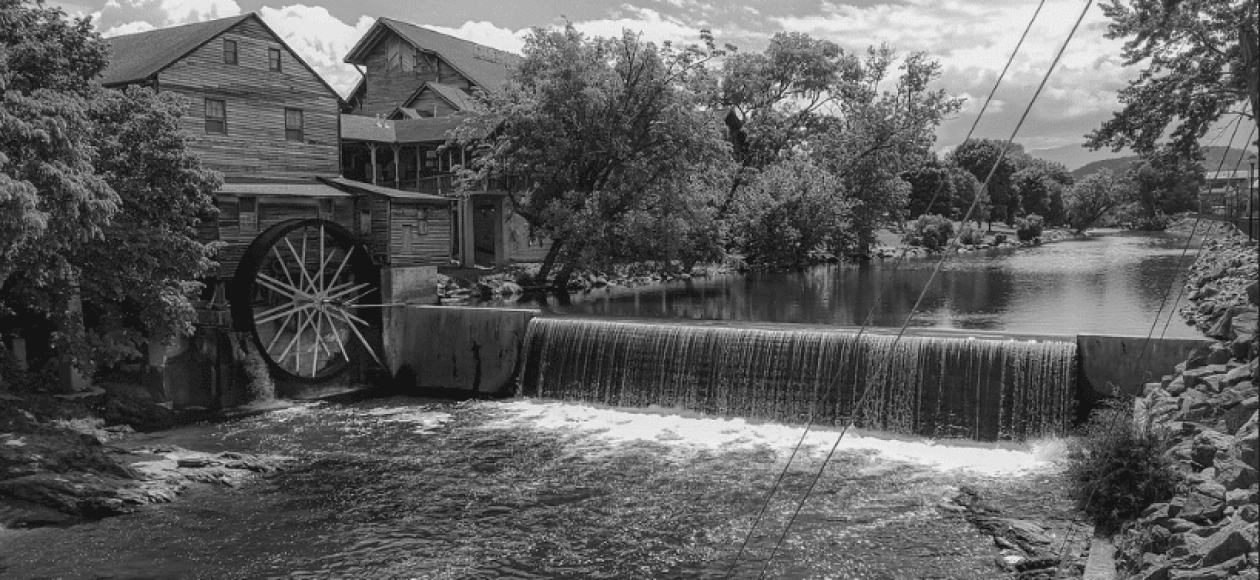
Despite dramatic changes to its physical landscape, Pigeon Forge has implemented several initiatives to preserve its historical identity. The Old Mill, dating to the 1830s and one of the town’s few surviving historic structures, operates today as both a working gristmill and popular restaurant complex. Its preservation offers visitors a tangible connection to the community’s industrial origins.
The Pigeon Forge Public Library maintains an extensive archive of historical photographs, documents, and oral histories, making these resources accessible to visitors and researchers interested in the area’s development. Community events like the annual Patriot Festival incorporate historical elements alongside contemporary entertainment.
Several newer attractions, while commercially oriented, incorporate educational elements about local history. The Alcatraz East Crime Museum, for example, includes exhibits on regional moonshining history and Appalachian law enforcement challenges, contextualizing mountain culture for visitors.
Balancing Development with Historical Integrity
The challenge of maintaining historical identity while accommodating millions of visitors has led to creative approaches throughout Pigeon Forge. Rather than attempting to preserve the entire town as a historical district (which would be impractical given development pressures), local planners have encouraged “pockets” of historical interpretation within the commercial landscape.
Architectural guidelines for new construction along the Parkway incorporate elements of mountain building traditions, even as structures serve thoroughly modern purposes. This creates a visual landscape that, while clearly commercial, maintains some regional character.
Limited zoning restrictions have produced a distinctive, sometimes chaotic commercial aesthetic that has itself become part of Pigeon Forge’s identity. The town’s enthusiastic embrace of neon, oversized attractions, and theatrical architecture creates an environment that visitors find memorable, if not historically authentic.
Local Organizations Dedicated to Preserving Pigeon Forge History
Several organizations work specifically to document and preserve aspects of Pigeon Forge history. The Smoky Mountain Historical Society publishes research on regional history and advocates for preservation throughout Sevier County. Their quarterly journal provides one of the most comprehensive records of the area’s development.
The Great Smoky Mountains Association, though primarily focused on the national park, supports research and educational programs that include Pigeon Forge’s historical development. Their publications and visitor center displays help contextualize the town’s growth within broader regional patterns.
Smaller efforts make significant contributions as well. The Pigeon Forge Rotary Club maintains historical markers throughout the community, and several churches preserve records dating to the 19th century. The descendants of pioneering families often serve as unofficial historians, sharing stories and artifacts at community events.
These preservation efforts face ongoing challenges from development pressures and the sheer volume of visitors (approximately 10 million annually). However, they represent a community commitment to maintaining connections with a rich historical legacy even as Pigeon Forge continues to evolve.
How to Experience Pigeon Forge History: A Visitor's Map
For visitors interested in exploring beyond the bright lights of the Parkway attractions, Pigeon Forge offers numerous opportunities to connect with its historical roots. The following guide highlights the most significant historical sites and experiences available today.
Top 5 Must-Visit Historical Sites
1. The Old Mill (175 Old Mill Avenue)
Dating to 1830, this working gristmill represents Pigeon Forge’s industrial heritage. Tour the mill operation, enjoy meals featuring stone-ground grains, and explore the surrounding historic district with craft shops operating in preserved structures.
It’s open daily from 8:30am to 9:00pm. Admission to the shopping district is free, with mill tours available for a modest fee.
2. Old Mill Square
Surrounding the Old Mill, this complex includes restored and recreated historical buildings housing restaurants, a distillery, and craft shops where artisans demonstrate traditional Appalachian techniques. The Square provides perspective on how commercial needs once centered around milling operations in small mountain communities.
3. Patriot Park (186 Old Mill Avenue)
While primarily a recreational space, this park includes historical markers detailing Pigeon Forge’s development and a Veterans Memorial honoring local military service. The park hosts heritage events throughout the year and provides access to the Little Pigeon River that powered the community’s early industry.
4. Original Pigeon Forge Iron Forge Site Marker (near Old Mill)
Though the original forge has long since disappeared, a historical marker indicates the approximate location where Isaac Love established the operation that gave the town its name. The site provides context for understanding the community’s industrial origins.
5. Dollywood's Craftsman's Valley (2700 Dollywood Parks Blvd)
While housed within a modern theme park, this area features authentic demonstrations of traditional crafts including blacksmithing, glassblowing, and woodcarving. Many demonstrators use techniques that would have been familiar to Pigeon Forge’s 19th-century residents. Park admission required; check seasonal operating schedule.
Also check out these free things to do in Pigeon Forge.
Seasonal Historical Events and Reenactments
Throughout the year, Pigeon Forge hosts events that celebrate aspects of local history:
Old Mill Heritage Day (October)
Demonstrations of traditional Appalachian crafts and food preparation centered around the historic Old Mill. Includes corn grinding demonstrations, traditional music, and living history presenters.
Dollywood’s Harvest Festival (September-October)
While primarily a fall celebration, this event includes demonstrations of traditional food preservation, quilting, and other seasonal activities that were essential to mountain life.
Patriot Festival (July)
Though focused on Independence Day celebrations, this event incorporates elements of local history and military heritage through displays and presentations.
Winterfest Celebration (November-February)
While mostly known for its light displays, Winterfest includes elements highlighting traditional mountain Christmas celebrations and winter survival techniques.
These events offer visitors opportunities to experience aspects of Pigeon Forge history through demonstrations, music, food, and storytelling that might not be available during routine visits.
Budget-Friendly Ways to Explore Local History
Exploring Pigeon Forge’s history doesn’t need to strain your vacation budget. Consider these affordable approaches:
Self-Guided Walking Tour
The area around the Old Mill is walkable and includes several historical markers and preserved structures.
Pigeon Forge Public Library Archives
The local library maintains historical photographs and documents available to the public at no charge. Their rotating exhibits often feature aspects of local history.
Church Cemeteries
Several of the oldest churches in Pigeon Forge maintain historic cemeteries with graves dating to the 19th century, offering glimpses into the lives of early settlers.
Scenic Drives
The backroads surrounding Pigeon Forge include historical farmsteads and mountain homesteads that illustrate regional architectural traditions.
Suggested Historical Itineraries
One-Day Historical Pigeon Forge Tour:
- Morning: Tour the Old Mill and Old Mill Square (2-3 hours)
- Lunch: Enjoy traditional Appalachian cuisine at the Old Mill Restaurant
- Afternoon: Visit Patriot Park and the forge site marker
- Evening: Attend a music show featuring traditional mountain music
Three-Day Historical Exploration:
- Day 1: Pigeon Forge origins (Old Mill, forge site, Patriot Park)
- Day 2: Cultural heritage at Dollywood's Craftsman's Valley and Mountain Life exhibits
- Day 3: Regional context with visits to nearby historical sites in Sevierville and the Great Smoky Mountains National Park's Mountain Farm Museum
These itineraries allow visitors to experience Pigeon Forge’s historical development chronologically while balancing educational content with entertainment suitable for various ages and interests.
Connecting Past and Present: Why Pigeon Forge History Matters Today
As you walk the bustling Parkway of modern Pigeon Forge, glimpses of its remarkable journey from industrial outpost to entertainment mecca emerge in unexpected places. The town’s historical narrative isn’t just preserved in museums or monuments but lives on in its entrepreneurial spirit, cultural celebrations, and continuing evolution.
The passenger pigeons that once darkened the skies above the Little Pigeon River are long gone, and the rhythmic pounding of Isaac Love’s iron forge exists only in historical accounts.
Yet, the resilience and adaptability that allowed a small mountain community to reinvent itself multiple times over two centuries remains evident in today’s Pigeon Forge.
Whether you’re riding a roller coaster at Dollywood, shopping at the Old Mill Square, or simply driving along the Parkway, you’re participating in the ongoing story of a community that continues to honor its past while embracing new possibilities.
That connection between past and present makes Pigeon Forge not just a vacation destination but a place where American history comes alive in unexpected ways.
Ready to plan a trip?
FAQs
Pigeon Forge is renowned for its proximity to the Great Smoky Mountains National Park, its family-friendly attractions like Dollywood, vibrant dinner shows, shopping, and a wide variety of entertainment options, making it one of America’s most popular vacation destinations.
The name comes from the now-extinct passenger pigeons that once flocked to the area and the iron forge built by Isaac Love in 1817, which was central to the community’s early industry
Pigeon Forge’s popularity stems from its scenic mountain setting, abundance of attractions for all ages, convenient location near the most visited national park in the U.S., and its reputation as a top destination for family vacations and entertainment
No major battles occurred in Pigeon Forge during the Civil War, but the area experienced divided loyalties, skirmishes, and guerrilla warfare due to its location in Unionist East Tennessee.


